This book was, in the very beginning, a five or six page unpublished short story. When I decided to try to write a book I really struggled with how to structure something much longer than I had ever written before. I decided to take the original short story and expand it to gain confidence and experience in writing longer. Apocrypha of Era is the result: a first book, expanded from a short story.
If the short story is something that you’d like to read, let me know with a comment or email. And, sign up below to receive an email when the next book comes out!
Era, the main character in Apocrypha of Era, is named in honor of Libera, a deity of uncertain mythology, whose story became lost and entangled with the stories of Persephone and Proserpina. Libera is referred to in the Oxford Classical Dictionary only in passing as a female counterpart to Liber Pater and as part of the Aventine temple of Liber, Libera, and Ceres. I wish there were more written about her. Some excerpts from what I have found follow.
“Liber and Libera, in Roman religion, a pair of fertility and cultivation deities of uncertain origin. Liber, though an old and native Italian deity, came to be identified with Dionysus. The triad Ceres, Liber, and Libera (his female counterpart) represented in Rome, from early times and always under Greek influence, the Eleusinian Demeter, Bacchus-Dionysus, and Kore (Persephone). Ovid (Fasti, Book III) identifies Libera with the deified Ariadne.” Source: Encyclopedia Britannica.
“The rites of Demeter, Proserpine, and Dionysus, which were indeed the most ancient most general and originally almost the sole rites of the gentile world, were very early introduced amongst the Italic nations. Amongst these people Proserpine and Dionysus were worshipped as Libera and Liber as the daughter and son of Ceres. The former, Cicero tells us, was the same as the Proserpine that was ravished from the fields of Enna. And it is remarkable that the temple that was dedicated by the dictator Posthumius, and which according to Tacitus was sacred to Ceres, Libera, and Liber, is called by Dionysius of Halicarnassus a temple dedicated to Demeter, Proserpine, and Dionysus. The three are mentioned in connection several times by Livy. Hence then we see why the mysteries of Dionysus were connected with those of Demeter; they were an integral part of them and rested on the same foundations.”
Source: The Classical Journal. (1829). United Kingdom: A.J. Valpy.
“Proserpina, Proserpine. SEE PERSEPHONE.”
Source: The Oxford Classical Dictionary. (1996). Third Edition.
“Apocrypha, (from Greek apokryptein, ‘to hide away’), in biblical literature, works outside an accepted canon of scripture. The history of the term’s usage indicates that it referred to a body of esoteric writings that were at first prized, later tolerated, and finally excluded.” Source: Encyclopedia Britannica.
Drop me a note or comment if you come across more about Libera.
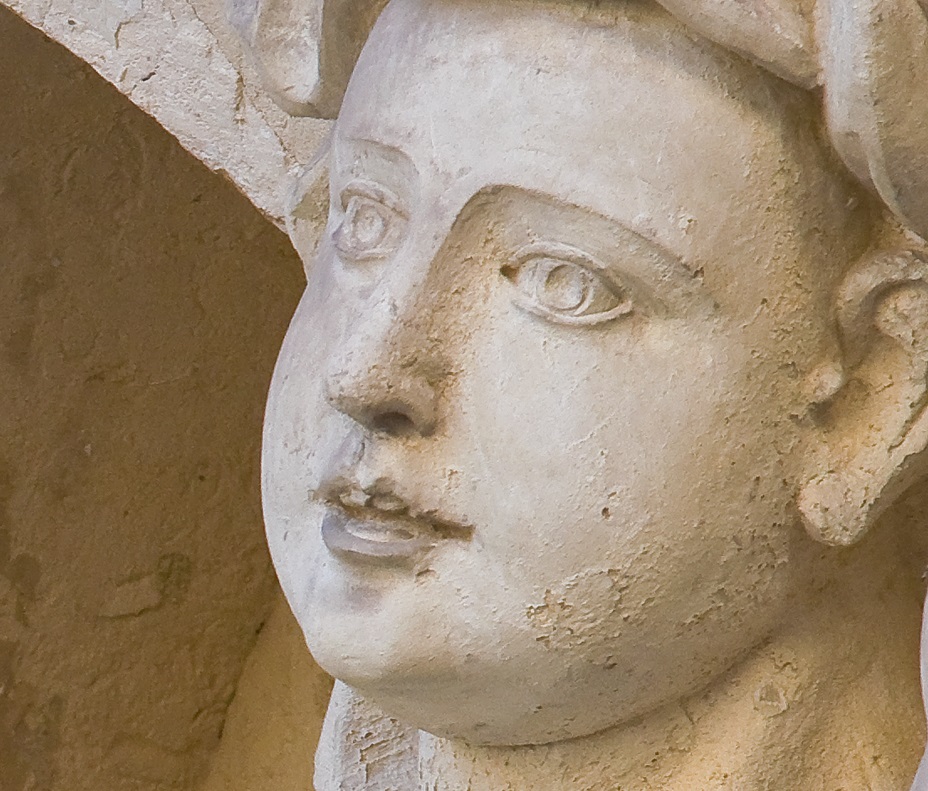
Marrese Palace. Lecce. Puglia. Italy.
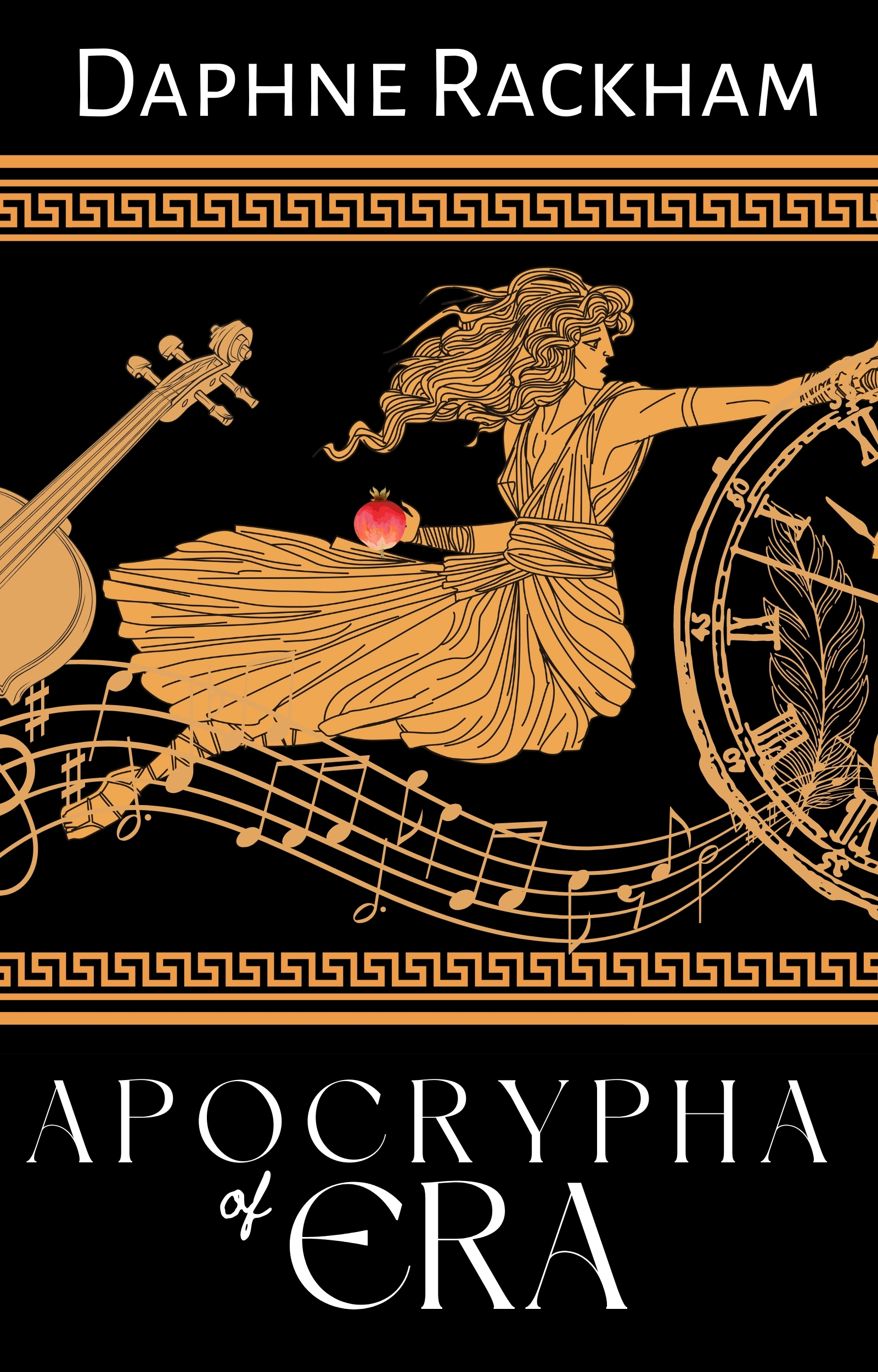
Apocrypha of Era is a lyrical fairy tale retelling of the myth of Persephone and Hades — warm, witty, and beautifully told — for readers who believe a woman should always get to speak for herself.
A Fairy Tale Retelling of Persephone and Hades: Apocrypha of Era
Era has always been warned away from the lord of the Underworld. So naturally, she kissed him first. A lyrical, feminist fairy tale retelling of Persephone and Hades — told, for the first time, entirely in her own words.
They say Hades swept her away to his kingdom of darkness. They’re wrong. Era has her own version of events — and she’d like to tell it herself.
The granddaughter of Father Time and daughter of the Queen of the Earth, Era has spent her whole life carefully watched, carefully kept, and carefully protected from a danger no one will name. She has learned to push past that careful boundary one daring act at a time.
So when she encounters the brooding, solitary lord of the Underworld at the edge of her family’s woodland — it is Era who draws closer. Era who dares herself. Era who kisses him first.
What follows is a secret courtship woven in cello and violin duets in the summer woods, through clockwork arches that shimmer with past and future, through the slow unraveling of a man who has everything and feels nothing — until her. Hades is powerful, lonely, and quietly undone by a woman who has no fear of the dark.
But Era’s family forbids the match, with reasons that reach back further than Era knows. And when she is forced to send Hades away, his grief takes the night with him — and leaves the world in endless, blinding light.
To bring him back, Era must find her way through laughter, music, and dance, to the one truth she has always known: some stories are too important to let someone else tell.
Apocrypha of Era is a lyrical fairy tale retelling of the myth of Persephone and Hades — warm, witty, and beautifully told — for readers who believe a woman should always get to speak for herself.